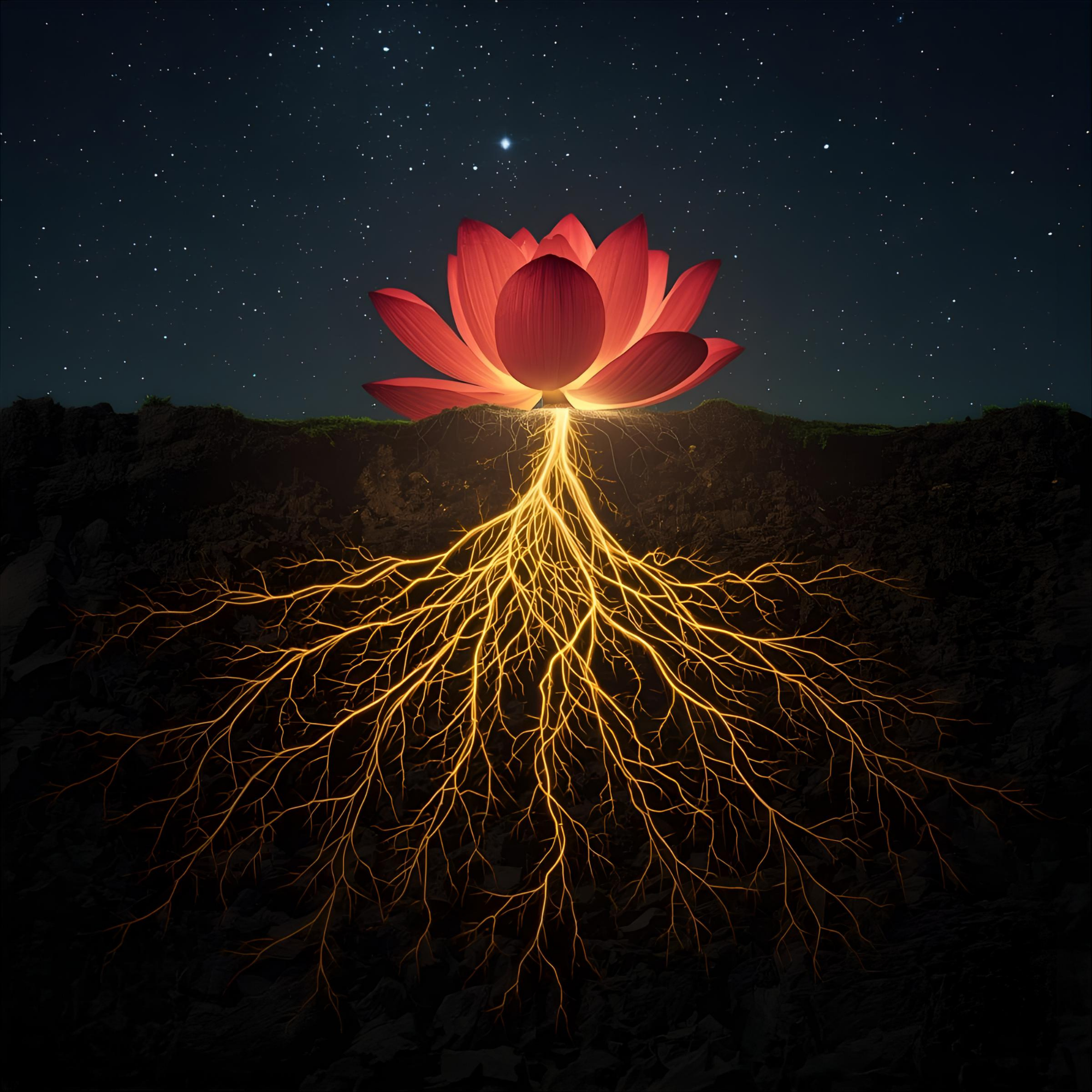
Understanding Ego Death
When Everything Falls Apart — And Why That Might Be the Best Thing That's Ever Happened to You
Sometimes what feels like everything falling apart is actually everything falling into place.
If you've found your way to this page, something in your life is probably in pieces right now. Maybe it's your identity, your relationships, your sense of direction — or all of the above.
Take a breath. You're not broken. You're not losing your mind. You're not doing anything wrong.
What you may be experiencing is one of the most profound and — yes, we'll say it — ultimately exciting passages available to human beings: the dissolution of who you were, making way for who you're actually meant to become.
It's uncomfortable. It's disorienting. And on the other side of it? That's where the magic lives.
What Is Ego Death?
Ego death is the dissolution of the constructed self — the identity, beliefs, patterns, and strategies that have defined you up until now. It's not the death of your essential self. It's the decomposition of the layers of conditioning, old survival mechanisms, and inherited patterns that have been running your life, often without your permission.
Think of it like a caterpillar entering a chrysalis. From the outside it looks like the caterpillar is dying — and in a sense, it is. Its form has to completely dissolve before the butterfly can emerge. The butterfly was always in there. It just needed the old form to get out of the way.
You're the butterfly. This is the chrysalis. And what's coming next is worth every uncomfortable moment of the process.
Signs You May Be in an Ego Death Process
When What Used to Work... Doesn't Anymore
One of the clearest signs of ego death is that your usual coping strategies, problem-solving approaches, and ways of moving through the world suddenly feel ineffective or empty. You might find yourself trying harder with the same old approaches only to feel more frustrated. Things that once fulfilled you — achievements, relationships, activities — now feel hollow. You might even notice yourself clinging to patterns you know aren't working, because at least they're familiar.
This isn't failure. This isn't weakness. This is your soul outgrowing the container of your old way of being. And that outgrowing — as uncomfortable as it feels — is the beginning of everything.
The Fear That Comes With It
Ego death almost always involves a period of increased resistance and fear — and that's completely normal. You might feel terror about letting go, anxiety about who you'll be on the other side, or existential panic that shows up as questions like "Who am I if I'm not this?" or "What's the point of anything?" You might find yourself clinging even more tightly to old patterns precisely because they're familiar — even when you know they're not working.
This resistance isn't a sign that something is wrong. Your nervous system's job is survival, and from its perspective any fundamental change feels threatening. The fear isn't evidence that you're in danger. It's evidence that you're at the edge of something new. And edges, as uncomfortable as they are, are where transformation lives.
What Your Body Might Be Telling You
Ego death isn't just a mental or emotional process — it lives in the body too. You might experience phantom pains, extreme fatigue followed by sudden bursts of energy, changes in appetite or sleep, or a heightened sensitivity to light, sound, and other people's emotions. Some people describe feeling like electricity is running through them. Others feel like they're simultaneously falling apart and coming alive.
These physical symptoms aren't signs that something is medically wrong. They're often your body's way of participating in the transformation — reorganizing itself at a level deeper than thought. If you're concerned about any physical symptoms, always check with your doctor. And if you get a clean bill of health and the symptoms persist — welcome to the chrysalis.
Is This a Spiritual Emergency or a Mental Health Crisis?
This is an important question — and one worth taking seriously.
Ego death and mental health crises can look similar from the inside, but they have different qualities. A spiritual emergency typically carries an underlying sense of meaning or purpose even through the chaos. You feel called toward something, even if you can't name it yet. You're disoriented but still able to meet your basic needs. The experience feels connected to your growth, even when it's painful.
A mental health crisis feels different. If you're having thoughts of harming yourself or others, if you're unable to care for your basic needs, if you're losing touch with reality in ways that feel dangerous, or if the experience feels purely chaotic with no sense of meaning underneath — please reach out to a mental health professional right away. This work is not a substitute for clinical care, and there is no shame in needing both.
Many people navigating profound transformation benefit from having both spiritual coaching and clinical support simultaneously. If you're unsure which applies to you, err on the side of getting a professional opinion. Your safety always comes first.
The Hero's Journey Through the Underworld
Your process follows one of the oldest stories humanity has ever told. Like Persephone, Inanna, and countless mythological figures across every culture, you've been called to descend into the underworld — not as punishment, but as initiation.
In this phase you might feel cut off from your ordinary life and identity, stripped of your usual sources of comfort and power, forced to confront the shadows and fears you've spent years avoiding. You might feel like the normal rules no longer apply — because they don't. You're in different territory now.
This descent isn't a detour from your path. It IS the path. And every hero who has ever made this journey has found the same thing waiting on the other side: a version of themselves that is freer, more authentic, and more alive than they ever imagined possible.
The underworld is not the destination. It's the doorway.
What Comes After
This is the question everyone in the middle of ego death is really asking: Will I be okay? Will life feel good again? Will I still be me?
Here's the honest answer: you can't fully know who you're becoming from inside the chrysalis. It's like asking a caterpillar to describe what it feels like to fly. The experience is so fundamentally different that it can't be conceived from where you're standing right now. And that uncertainty — as uncomfortable as it is — is actually the point. What's coming exists beyond the limitations of your current identity. You can't imagine it yet because you haven't become it yet.
What you can know is this: the people who come through this process don't describe loss. They describe liberation. Less controlled by fear and external validation. More present, more authentic, more alive. A deeper sense of peace even in challenging circumstances. Freedom from patterns that once felt compulsive and impossible to break.
And the joy. People are always surprised by the joy.
You're not losing yourself in this process. You're finding yourself — freed from the distortions of conditioning and fear, from the survival strategies that kept you safe but small. Everything that makes you genuinely you — your humor, your creativity, your capacity for love — doesn't disappear. It gets louder.
This is what's waiting on the other side. And it's worth every uncomfortable moment of the journey to get there.
How to Navigate the Process
Ego death can't be rushed or controlled — and trying to do either usually just makes it harder. But there are ways to support yourself through the journey.
The most important practice is learning to stop fighting what's happening. Not passivity — but a willingness to release the struggle against reality. When you notice yourself resisting, try asking: What if this is exactly what needs to be happening right now? That one question can shift everything.
Normalize the uncertainty. Not knowing what comes next isn't a problem to solve — it's the nature of transformation. The space between who you were and who you're becoming is where new possibilities are born. You don't need to know who you're becoming. You only need to trust the process of becoming.
Be extraordinarily gentle with yourself. You're going through something profound. Treat yourself with the same tenderness you'd offer someone you love who was going through the hardest thing of their life. Because that's exactly what's happening.
Find support. This journey is navigable — but it's much easier with a guide who understands the territory. Someone who can normalize your experience, name the pattern you're in, and remind you what's waiting on the other side when you can't see it yourself. You don't have to do this alone. In fact, you probably shouldn't.
And trust the timing. Some people move through this in weeks. Others take years. Your process has its own intelligence and its own pace. The only wrong way to do this is to rush it — or to white-knuckle it alone when support is available.
Integration — Living the Transformation
Having a breakthrough doesn't automatically mean you're transformed. The real work — and honestly, some of the most rewarding work — happens in integration. This is where you take everything that shifted during the dissolution and weave it into the fabric of your actual daily life.
Integration looks different for everyone. It might involve slowly re-engaging with your normal activities while staying curious about how they feel different now. It might mean making sense of what you experienced with someone who understands the territory. It might involve developing new practices that support who you're becoming, learning to protect your newly sensitive system while you're still finding your footing, or finding community with others who get it.
Integration takes time — sometimes months, sometimes years. And that's not a problem. It's the process of actually becoming the butterfly rather than just dissolving the caterpillar. Be patient with yourself. The blooming is worth the wait.
At Soul Bloom we call this journey From Seed to Bloom — a map of the transformation process that mirrors exactly what you're experiencing. If you'd like to understand the full arc of what's happening, explore the framework here.
You're Not Alone
If you recognize yourself anywhere in this page, please know — you're not alone, you're not crazy, and you're not broken. You're in the middle of one of the most courageous journeys a human being can undertake.
Ego death feels like an ending because it is one — the ending of a version of you that was never really you to begin with. What's being born on the other side is your actual self, freed from the limitations and fears that have been running the show.
The butterfly doesn't mourn the caterpillar. And when you emerge from your own chrysalis, you'll understand why this passage — as hard as it was — was also the best thing that ever happened to you.
What's falling apart in your life isn't your failure. It's your freedom being born.
And the magic on the other side? It's real. I've lived it. And I've had the privilege of watching countless others find it too.
If you're ready for a guide through this passage — someone who understands the territory, can name the pattern you're in, and genuinely can't wait to show you what's waiting on the other side — I'd love to connect.
The adventure starts here.